Introduction: Your Child’s Language Identity
Teaching your child Ejagham is one of the most meaningful investments you can make in their identity and cultural connection. But many diaspora parents wonder: where do I start? Will it confuse them? Is it even practical? The answer to all three questions is yes—here’s why and how.
Your parents spoke Ejagham fluently. Your grandparents didn’t just speak it—they created civilization with it. One thousand five hundred years before the alphabet spread across Europe, your ancestors invented the Nsibidi writing system. Your great-great-grandparents governed entire communities through the Ekpe society, using Ejagham as the language of power, law, and sacred knowledge.
Now your 8-year-old asks you: “Mummy, what does nti’maetahn mean?”
And you realize—you’re not entirely sure. Or worse, you know it’s a yam title that once defined a man’s entire social status, but you don’t know how to explain that to a child who grows up in a world where yams are something you buy at Waitrose, when they’re available at all.
This is the moment many diaspora parents face. You want your child to know where they come from. You want them to speak the language. You want them to understand that being Manyu means something profound. But you’re not sure where to start, whether it’s practical, or if they’ll even be interested.
The good news? Teaching your child Ejagham is one of the most meaningful investments you can make in their identity, their cognitive development, and their connection to a heritage that shaped them before they were born. It’s not about creating perfectly fluent speakers (though that’s possible). It’s about giving them roots in a world that’s constantly pulling them toward rootlessness.
Let me show you why—and how.
Why Teaching Your Child Ejagham Matters: What They’re Missing
Teaching Your Child Ejagham: A Language They Don’t Speak Yet
When your child doesn’t speak Ejagham, they’re not just missing vocabulary. They’re missing entire ways of understanding the world.
Ejagham is a Bantu language with sophisticated complexity. It contains 19 consonant phonemes, a 10-vowel system with ATR harmony, and a tone system that marks meaning differences at grammatical and lexical levels. That sounds technical because it is—but what it means practically is this: Ejagham requires different parts of your brain to work than English does.
Linguists call this “metalinguistic awareness.” When children learn multiple languages, particularly languages with different grammatical structures, they develop better overall language skills, stronger cognitive flexibility, and literally stronger neural connections in the language centers of their brains.
But here’s what matters more than the neuroscience: When your child speaks Ejagham, they’re accessing a different way of being Manyu.
In Ejagham, there are words for concepts that don’t translate directly to English:
- Ekpokpa – meaning “united people,” a descriptor that embeds the entire philosophy of Manyu collective identity
- Nti’maetahn – a yam title that represents not just wealth but a man’s entire social standing, integrity, and capability
- Ikan – ancestral retribution, a concept tied to the spiritual cosmology that shaped law and governance for millennia
- Moninkim – not just a dance, but a specific moment in a woman’s life when she publicly claimed her adult identity and capability
These words carry cultural weight that translation flattens. Your child might understand “united people,” but do they feel the belonging embedded in Ekpokpa? Do they comprehend that yams represented success so completely that men asking for your hand in marriage would ask “How big is your yam barn?”—not out of rudeness, but because that question answered everything about capability, status, and readiness?
Language is culture. When your child speaks Ejagham, even badly, they’re accessing Manyu identity in a way that no amount of cultural explanations through English can replicate.
The Stories Only Grandparents Can Tell
You’ve probably noticed something: your parents explain Manyu traditions differently than you do.
When your mum talks about the New Yam Festival, she doesn’t just describe the ceremony. She explains how the yam barn showed the world that a man had worked, planned, invested, and succeeded. She talks about the shame if your yam barn was small. The pride when the harvest was abundant. The way your father’s status in the community literally depended on how many yams he produced.
When she says this in Ejagham, with the cultural concepts embedded in the language itself, your understanding shifts.
But here’s the tragedy of diaspora language loss: the generation that speaks Ejagham fluently is aging. Your parents are the keepers of this knowledge in its fullest form. Your children might grow up in a world where nobody around them speaks Ejagham. The stories, the explanations, the philosophical concepts embedded in the language—they all risk being lost.
Not immediately. But generation by generation, the language fades. The understanding fades with it.
When your child learns Ejagham, they’re capturing the voices of their grandparents and great-grandparents before that connection becomes impossible.
Teaching Your Child Ejagham: Cognitive Benefits Backed by Science
If emotional connection isn’t enough motivation, here’s the science: multilingual children outperform monolingual children on multiple cognitive measures.
Research in child development consistently shows that children who learn multiple languages, especially in early years, develop:
Better Executive Function – The ability to switch between languages strengthens the brain’s ability to focus, plan, and manage attention. Multilingual children are literally training their brains to handle complexity.
Stronger Problem-Solving Skills – Learning a language with different grammar structures (like Ejagham, with its noun class system and tonal marking) forces the brain to think about language itself differently. This translates to better abstract thinking.
Enhanced Creativity – Multilingual speakers have been shown to score higher on creative problem-solving tasks, possibly because they’ve learned to see the world through multiple linguistic lenses.
Greater Cultural Intelligence – This one’s harder to measure but matters immensely: children who speak their heritage language develop stronger connection to their cultural identity, which research links to better self-esteem, stronger family relationships, and clearer sense of belonging. Bilingual children develop literacy skills faster than monolingual peers.
Academic Advantage – Contrary to the myth that learning multiple languages “confuses” children, multilingual children typically develop stronger overall literacy skills, including in their majority language (English, in your case).
One fascinating study found that bilingual children actually develop literacy skills faster than monolingual peers—because the cognitive work of managing two language systems strengthens the neural pathways that reading and writing use.
Your child learning Ejagham isn’t slowing them down. It’s giving them a cognitive advantage.
The Identity Crisis Your Child Might Not Have (If You Act Now)
There’s a phenomenon that diaspora communities talk about quietly: identity fragmentation among second and third-generation children.
Your child grows up in the UK. They go to British schools. They watch British television. They speak English with a London accent. Their friends are from a dozen different backgrounds. They might not see another Manyu child for months.
Meanwhile, at home, you’re trying to maintain connection to a culture they experience primarily through:
- Occasional visits to relatives
- Your cooking
- Stories you tell
- Family gatherings
Without language, that connection is thin. They can’t talk to Grandma properly. They miss jokes and stories because they don’t understand the cultural context. They start to feel like outsiders in their own heritage.
Then, around age 14-16, something happens: they start wondering who they are. And if they don’t have a strong cultural anchor, they can experience real identity confusion.
Research on diaspora youth identity shows that children with stronger connection to heritage language have stronger sense of belonging, better relationships with family, and more stable identity formation during adolescence.
Learning Ejagham isn’t just about preserving a language. It’s about giving your child an anchor they can return to when they’re trying to figure out where they fit in the world.
The Current Threat to Ejagham (And Why Time Matters)
Here’s something that might shock you: Ejagham is classified as “stable” by linguists, but only barely.
UNESCO and linguistic authorities classify Ejagham as Level 5 (Stable) in language vitality. That sounds good. It means the language is still spoken as a first language by Ejagham people in Cameroon and Nigeria. It’s taught in some schools.
But the reality is more fragile than that classification suggests.
In diaspora communities, Ejagham is under pressure:
- 90% of Manyu youth under age 35 are migrating to urban areas, away from rural communities where the language is strongest
- English and Pidgin English dominate in cities, with Ejagham relegated to home use only
- Fewer than 5% of diaspora children under 18 speak Ejagham fluently
- Each generation that doesn’t learn the language sees its speakers decline by roughly 40-50%
At this rate, Ejagham could face serious endangerment within two to three generations of diaspora families.
The good news? We’re not there yet. Your parents and grandparents can still speak fluent Ejagham. The language is still living, still spoken, still connected to active cultural practice through ceremonies, festivals, and family gatherings.
But the window for your child to learn from native speakers is narrowing.
This isn’t meant to scare you. It’s meant to motivate you. The difference between your child learning Ejagham now (when native speakers are still living, when family gatherings still happen, when they can hear the language spoken) versus your child learning it in 20 years (from recordings and textbooks, with no native speakers to practice with) is enormous.
Practical Barriers—And Why They’re Not Actually Barriers
“But I Don’t Speak Ejagham Fluently Anymore”
This is the biggest excuse—and it’s completely unnecessary.
You don’t need to be fluent to teach your child. You need to be interested and committed.
Here’s what actually works: you and your child learn together. Your parents help. Community resources help. You create an environment where Ejagham is present and valued, even if nobody’s perfectly fluent.
Children are incredible language learners. Your child can learn from:
- Recordings and videos (there are more resources now than ever before)
- Online tutors who are native speakers
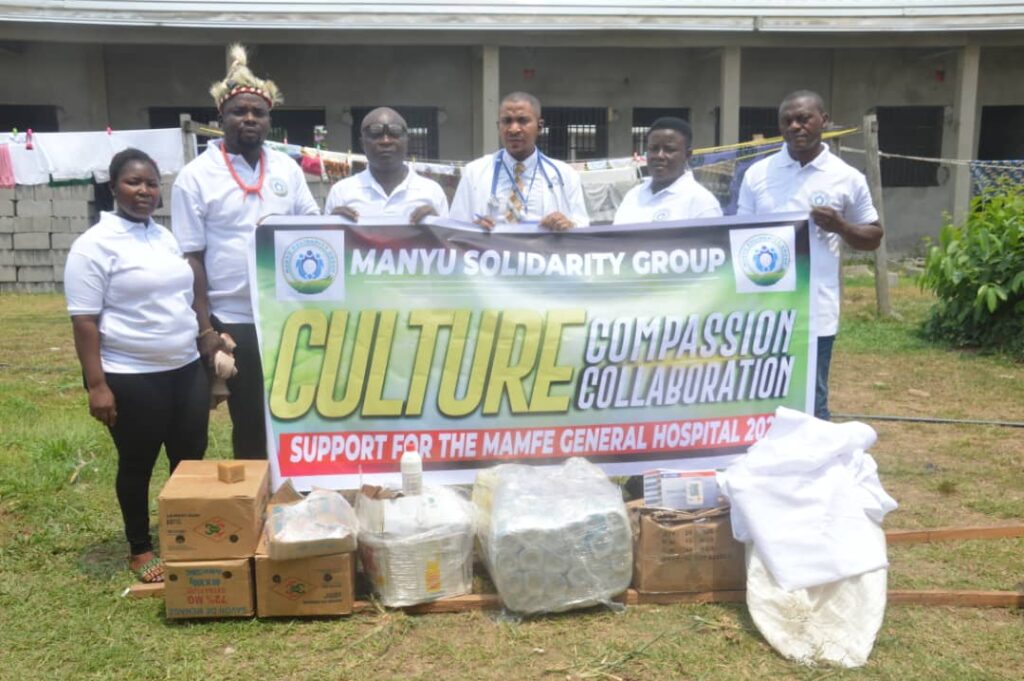
- Community classes (Manyu Solidarity Group offers these)
- Family members—even if they’re not perfect speakers
- Mobile apps and language learning platforms
Your role isn’t to be a perfect teacher. Your role is to create the environment and motivation for learning. That you can do, even if your own Ejagham is rusty.
“They’re Already So Busy with School”
Language learning doesn’t require hours of study. It requires consistency.
Research on language acquisition in children shows that 15-20 minutes of daily exposure produces measurable language development. That’s:
- Listening to Ejagham music in the car
- A short conversation at dinner
- A video call with Grandma
- A bedtime story in Ejagham
You don’t need to create a formal “class.” You need to weave the language into existing family routines.
Many parents worry that adding language learning will overwhelm their already-packed children. But the research is clear: bilingual development doesn’t slow academic progress. In fact, it often enhances it.
“Won’t It Confuse Them with English?”
No. This is a myth that needs to die.
For decades, parents were told that multilingualism in childhood would create “confusion” and slow language development. Decades of research has thoroughly disproven this.
What actually happens: your child’s brain is incredibly good at separating languages. By age 3-4, children naturally organize multiple language systems in separate mental compartments. They know who speaks which language and adjust automatically.
They’re not confused. They’re bilingual.
The only “confusion” that sometimes happens is code-switching—mixing languages—which is a sign of bilingual fluency, not confusion. (When multilingual adults switch languages in the middle of sentences, they’re doing something cognitively sophisticated, not making a mistake.)
“But They Don’t Want To Learn”
This is where motivation and environment matter.
If Ejagham is positioned as a “chore” or “thing you have to do for cultural reasons,” your child will resist. But if it’s positioned as a superpower, a connection to cool ancestors, a way to talk to relatives, a key to understanding your family’s stories—that changes everything.
Some practical motivation-builders:
- Make it relational. Learning Ejagham is a way to talk to Grandma. That’s the hook. It’s not about “preserving culture”; it’s about connection.
- Make it fun. Teach Ejagham through music, dance, TikTok videos of other young people speaking it, storytelling—not through worksheets.
- Make it visible. Show your child other diaspora youth who speak Ejagham and think it’s cool. (Spoiler: they exist, and their numbers are growing.)
- Make it prestigious. In your family, speaking Ejagham is something to be proud of. Celebrate when your child learns new words. Show your family members how proud you are of their progress.
Your child will learn what you demonstrate is valuable.
How to Actually Get Started (Without Overwhelming Yourself)
Month 1: Create the Foundation
Week 1-2: Assess Your Resources
- Reconnect with family members who speak fluent Ejagham. Let them know you want to help your child learn.
- Search for existing Ejagham learning materials (SIL International has phonology and orthography guides; some resources are available online)
- Identify what resources your local community has (is there a Manyu organization near you? A church with Ejagham speakers?)
Week 3-4: Start Small
- Introduce 5-10 common words: greetings, family terms, food names, body parts
- Create a simple routine (e.g., dinner conversation, bedtime story) where you use these words
- Get a recording of Ejagham music or stories and play it regularly (no pressure to understand every word)
Month 2: Build Routine and Community
Get your child involved with other Manyu children learning the language. Isolation makes learning hard. Community makes it natural.
- Look for Manyu cultural events in your area
- Join online communities (Facebook groups, Discord servers for diaspora Manyu people)
- Consider group classes through Manyu Solidarity Group UK or similar organizations
Create a home language environment:
- Label items in your home with Ejagham words and English translations
- Designate certain times as “Ejagham time” (no pressure, just habit)
- Use family videos or FaceTime calls with Ejagham-speaking relatives as conversation practice
Month 3: Find a Learning Structure
By now you’ll know whether your child is interested and what approach works for them. Options include:
Option A: Community Classes
- Manyu Solidarity Group UK offers structured Ejagham lessons
- Join online through established Manyu organizations
- Benefit: Community, peer learning, accountability, guided curriculum
Option B: Online Tutoring
- Native speaker tutors available through platforms or through community connections
- 2-3 sessions per week, 30-45 minutes
- Benefit: Personalized learning, one-on-one attention, flexible scheduling
Option C: Hybrid Family Learning
- Your family learns together using available resources
- Combine videos, apps, books, and occasional tutoring sessions
- Benefit: Natural family bonding, flexible, cost-effective
Option D: Immersion Experiences
- Plan visits to Cameroon or arrange longer stays during holidays
- Video calls with extended family (planned “conversation practice”)
- Summer camps or cultural immersion programs (increasingly available in diaspora communities)
- Benefit: Intensive exposure, living culture, family connection
The Deeper Why: What You’re Really Giving Your Child
Here’s what happens when your child learns Ejagham:
They understand their grandmother differently. Not just her words, but her way of thinking. The concepts embedded in her language. The values that shaped her life and therefore shaped yours. The humor that works in Ejagham. The stories that make sense in Ejagham.
They access their history. The Ikom monoliths aren’t just old rocks. They’re evidence that your ancestors created civilization. The Nsibidi writing system isn’t a curiosity—it’s proof that your people invented sophisticated intellectual systems thousands of years before colonization. The Ekpe society wasn’t primitive governance—it was democracy and law refined over millennia. When your child speaks Ejagham, they’re not just learning vocabulary. They’re learning to see their ancestors as creators, not victims.
They gain flexibility. A brain that speaks two languages is different—more adaptable, more creative, better able to see problems from multiple angles. Your child isn’t giving up English to learn Ejagham. They’re gaining a cognitive advantage.
They belong somewhere. In a world that constantly tells diaspora children they’re “not quite British, not quite Cameroonian,” speaking Ejagham is an anchor. It’s a way of saying: I know where I come from. I’m connected to something that goes back centuries. I belong to a people.
Teaching Your Child Ejagham: Support Through Manyu Solidarity Group
If this has resonated with you—if you’re thinking “yes, I want my child to learn Ejagham, but I need support and community”—that’s exactly why Manyu Solidarity Group exists.
As a member, you and your child get access to:
Structured Ejagham Learning Programs
- Group classes for children (different levels)
- Family conversation circles
- Video resources and recorded lessons
- Connection with native speakers who can guide your child’s learning
Community of Families Doing This Too
- Other parents navigating the same journey
- Your child learns alongside other Manyu children (not alone)
- Events where Ejagham is spoken and valued
- Real relationships with extended family and community
Cultural Context and Mentorship
- Understanding why Ejagham matters (not just how to speak it)
- Stories and history so your child knows who the ancestors were
- Mentors who’ve successfully maintained language and culture in diaspora
- Connection to the broader Manyu community—across the UK, across continents
Practical Resources
- Vetted learning materials
- Connections to tutors and language resources
- Community directory so you find other Ejagham-learning families near you
- Guidance on how to support your child’s language learning alongside English development
Events Where Language Comes Alive
- Cultural celebrations where Ejagham is spoken
- Workshops where your child sees peers their age speaking the language
- Family gatherings where being Manyu means something tangible, not abstract
[Membership information box would go here]
Membership with Manyu Solidarity Group UK isn’t just about language classes. It’s about ensuring your child grows up with roots, community, and the knowledge that being Manyu is something to be proud of.
Addressing Your Remaining Doubts
“What If They Never Become Fluent?”
Fluency is a spectrum, not a binary. Your child doesn’t need to be fluent to benefit enormously.
Even limited Ejagham ability provides:
- Ability to communicate with grandparents and extended family
- Understanding of cultural concepts and stories
- Connection to heritage identity
- Cognitive benefits of bilingualism
- Foundation for deeper learning later in life
Many second-generation diaspora speakers describe themselves as “heritage speakers”—they understand more than they speak, they’re not perfect, but they can access their culture and family in a way that monolingual peers cannot. That’s hugely valuable.
“What If They Lose It Later?”
Language you learn in childhood isn’t truly lost, even if it becomes passive. Your child might speak less Ejagham as a teenager (this is normal). But the neural patterns formed by childhood language learning remain. If they need to reactivate the language later, it comes back much faster than learning from scratch.
Plus—and this matters—children who grew up hearing and speaking their heritage language maintain connection to that heritage, even if the language skills fade. They maintain pride in it. They maintain openness to the culture. The foundation remains.
“Isn’t It Too Late If They’re Already in Primary School?”
No, not at all. Children continue acquiring language throughout childhood and into adolescence. Teenagers can learn heritage languages effectively, though early childhood learning (ages 0-8) does create deeper fluency.
But here’s the thing: it’s never too late to start, and the earlier you start, the easier it becomes. Whether your child is 5 or 15, today is the best day to begin.
FAQ: Common Questions From Diaspora Parents
Q: Will my child have an accent?
A: Yes, likely. Most heritage speakers have accents influenced by their majority language (English, in this case). That’s completely normal and not a problem. Native speakers understand them fine, and the accent doesn’t reduce the cognitive or cultural benefits of learning the language.
Q: How much will it cost?
A: This depends on your approach. Community classes through Manyu Solidarity Group UK are significantly cheaper than private tutoring. Group learning is more affordable than one-on-one. Many resources are free online. Family learning (with family members helping) costs nothing. You can start with free resources and add paid classes as you see your child’s interest develop.
Q: Will it interfere with learning French or other school languages?
A: No. In fact, learning a heritage language often helps children understand language structure better, which helps them learn school languages faster. Your child’s brain can absolutely handle three or four languages simultaneously.
Q: What if my family speaks different Manyu languages (Ejagham vs. Kenyang, for example)?
A: Excellent question. The same principles apply—teach your child the language(s) your family speaks. If family members speak different languages, that’s even better—your child learns linguistic flexibility. The concepts here apply to Kenyang, Denya, or any Manyu language.
Q: How long until they can hold a conversation?
A: With consistent exposure and practice, basic conversational ability (simple sentences, basic vocabulary) develops in 6-12 months. Meaningful conversation with family members develops over 1-2 years. Full fluency takes much longer. But again—meaningful conversations with grandparents don’t require perfect fluency.
Q: What if our family only speaks English at home now?
A: This is extremely common in diaspora families. You can still start—especially with community support. Your child is learning from scratch, which means they’re learning from the same starting point as heritage learners who grew up in Cameroon but moved to the UK as teenagers. Community classes are designed for exactly this situation.
The Bottom Line: Why This Matters Now
Your child is growing up in a world that will constantly tell them to assimilate, to forget, to move forward into the generic globalized culture that erases specificity.
Learning Ejagham is an act of resistance to that erasure. Not angry resistance—joyful resistance. It’s saying: my ancestors matter. My culture matters. I want to know my family, really know them, not just in English translation. I want to access the way of thinking that shaped who I am.
Your child won’t thank you for it at age 8. But at 16, when they’re figuring out who they are? At 25, when they’re proud to speak to their grandmother in her language? At 40, when they’re teaching their child the words you taught them?
That’s when they’ll understand what you gave them.
It’s not just a language. It’s roots. It’s belonging. It’s proof that in a world that often tells diaspora people they’re not quite belonging anywhere, they have somewhere they belong—to their people, their language, their history.
Take Action Today
You don’t need to have it all figured out. You don’t need to be a perfect speaker. You don’t need to wait for the perfect moment.
You just need to start.
This week:
- Text a family member who speaks Ejagham. Tell them you want your child to learn. Ask if they’d be willing to have weekly video calls in Ejagham.
- Find one community resource:
- Search “Manyu UK” + your city
- Look for Manyu organizations on Facebook
- Explore online learning communities for diaspora language learning
- Introduce one word to your child. Teach them how to say “hello” (Mbuai) or their food or their family name in Ejagham. Make it fun. Make it about connection, not obligation.
This month:
- Join Manyu Solidarity Group UK if you haven’t already. Access to classes, community, and resources designed specifically for diaspora families doing exactly what you’re doing.
- Set up a regular conversation time with Ejagham-speaking family
- Listen to Ejagham music or stories together as a family—no pressure to understand, just exposure
This year:
- Your child will have basic Ejagham ability
- They’ll be connected to other Manyu children learning the language
- They’ll have meaningful conversations with family members
- They’ll be developing stronger identity as a Manyu person
- They’ll have a cognitive advantage you can’t quantify but will absolutely see
Closing Thought
Your parents spoke Ejagham naturally, without thinking about it. You learned it, but now you’re somewhere between fluent and rusty. Your child—your child could be bilingual. Could have the language embedded in their brain from childhood, accessible their whole life.
Not because it’s perfect. But because it matters. Because they matter. Because knowing where you come from is one of the greatest gifts a parent can give.
Your child should learn Ejagham because they deserve to know their own people in their own language.
That’s the real why. Everything else follows from that.
Ready to get started? Join Manyu Solidarity Group UK for structured learning programs, community support, and the confidence of knowing you’re not doing this alone.